
Understand the Complete Treatment Train Before Choosing Plants
Constructed Wetlands for Wastewater Treatment
Constructed wetlands are engineered treatment systems that use controlled water movement, porous media, microorganisms and wetland vegetation to treat or polish specific wastewater streams. They are not ordinary decorative ponds and should not be designed by selecting a few water plants and allowing sewage to flow through them.
Separate Engineered Treatment From Decorative Pond Planting
What a Constructed Wetland Is—and Is Not
A treatment wetland is built for a defined influent, hydraulic load and water-quality objective. A normal garden pond may contain similar plants but does not automatically provide safe or compliant wastewater treatment.
An Engineered Basin
The system includes a liner or other seepage control, selected media, inlet and outlet structures, flow distribution and maintenance access.
Part of a Treatment Train
Screening, settling, septic treatment or another pretreatment stage commonly removes solids before water reaches the planted cell.
Designed for a Target
The design depends on which pollutants must be reduced and what discharge, reuse or polishing standard must be achieved.
Monitored and Maintained
Sampling points, hydraulic inspection, vegetation management, sludge handling and corrective maintenance remain necessary throughout the system’s life.
This page is an educational overview, not a construction plan.
Domestic sewage, commercial wastewater, industrial wastewater and treated-effluent reuse can create serious health, groundwater and environmental risks. Engage appropriately qualified wastewater professionals and the relevant local authority before designing, building or operating a system.
Plants Support the Habitat in Which Treatment Processes Occur
How Wastewater Treatment Actually Happens
No single process removes every contaminant. Performance emerges from the interaction of hydraulics, settling, filtration, microbial reactions, media chemistry, plant growth and maintenance.
Screening and Settling
Pretreatment removes coarse debris, grease and settleable solids that could block distribution pipes or clog the wetland media.
Physical Filtration
Suspended particles may be trapped as water moves through vegetation, gravel, sand or other specified porous media.
Microbial Breakdown
Biofilms growing on media, roots and plant litter transform and break down organic material under aerobic and anaerobic conditions.
Nitrogen Transformation
Different zones can support nitrification, denitrification and other nitrogen pathways. Reliable removal depends on oxygen, carbon, loading and flow conditions.
Phosphorus Retention
Phosphorus may be retained in solids, biomass and media through settling, adsorption, precipitation and biological uptake. It does not normally leave the system as a gas.
Plant and Root Support
Wetland plants stabilize surfaces, provide root and stem habitat, influence local oxygen conditions and take up nutrients while growing.
Flow Path Determines Exposure, Oxygen Transfer and Maintenance
The Main Constructed-Wetland Types
Each configuration has different advantages and limitations. The correct choice depends on influent quality, treatment objectives, available land, climate, exposure control and operator capacity.
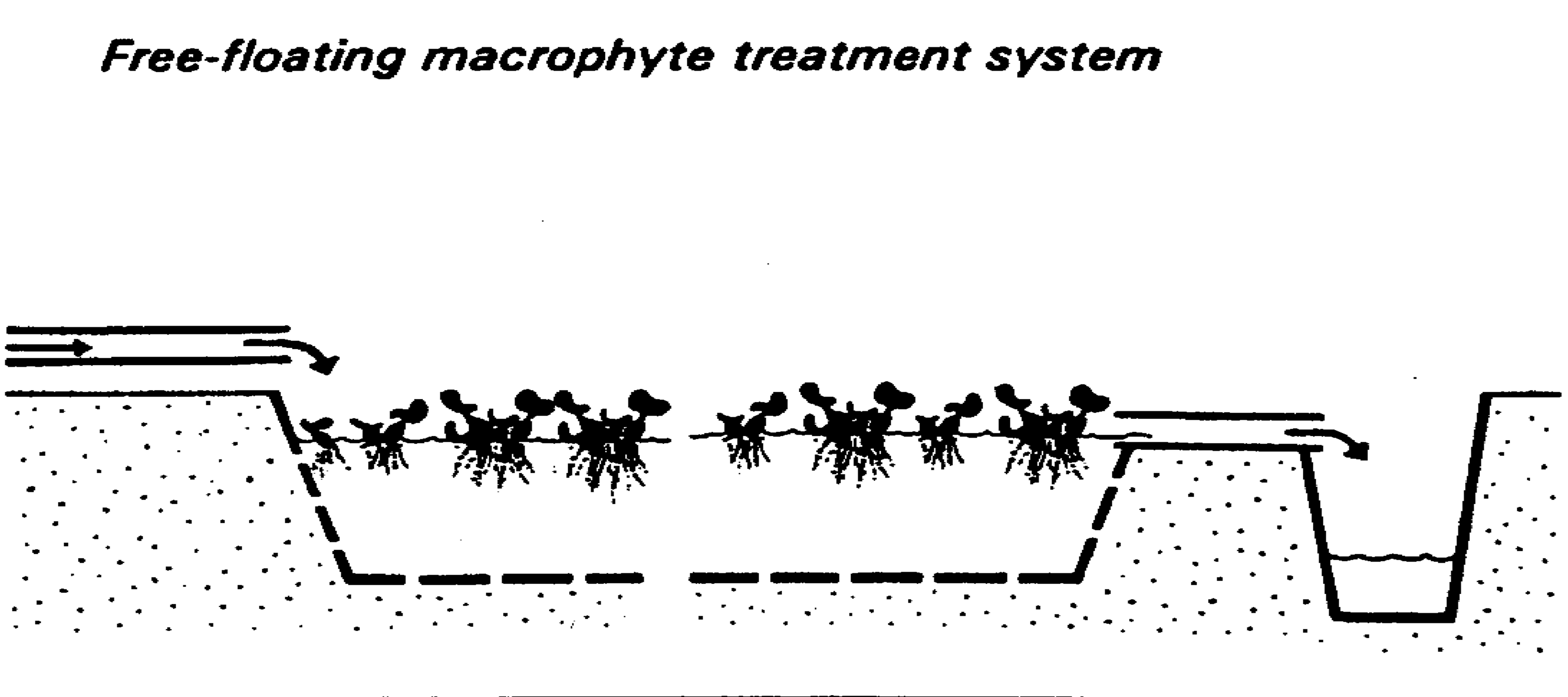
Free-Water-Surface Wetland
Water flows above the soil or media surface through shallow, vegetated cells. These systems can resemble natural wetlands, but open wastewater creates greater potential for human, animal, odor and vector exposure.
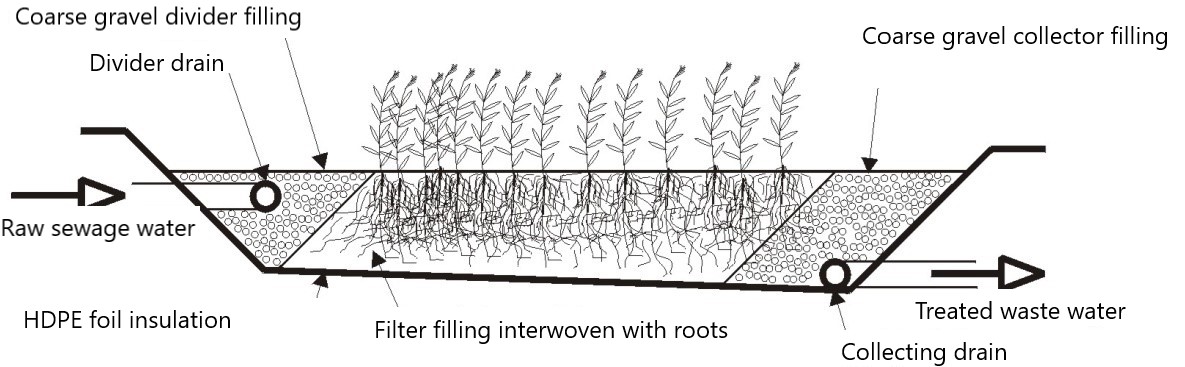
Horizontal Subsurface-Flow Wetland
Pretreated water moves horizontally through saturated porous media beneath the surface. This limits direct contact but requires careful inlet distribution and protection against clogging.
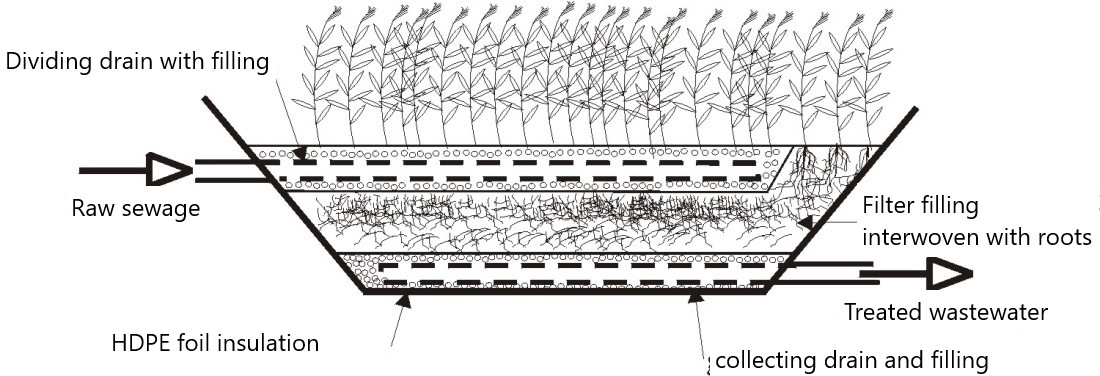
Vertical-Flow Wetland
Water is distributed over the upper surface and moves downward or, less commonly, upward through the media. Intermittent dosing can improve air movement, but pumps, dosing equipment and distribution maintenance may be needed.
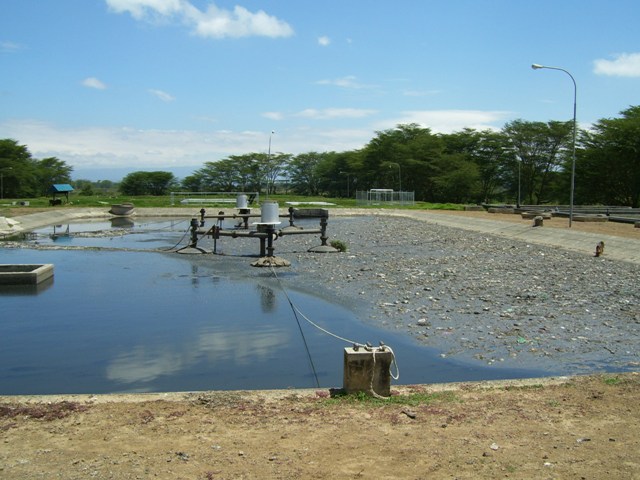
Hybrid or Multistage Wetland
Horizontal, vertical or open-water cells can be connected in sequence to provide different oxygen and treatment conditions. A hybrid system may improve overall performance but also increases design and operational complexity.
Identify the Professional Pathway Before Discussing Bed Size
Constructed-Wetland Project Orientation
This tool does not calculate dimensions or certify treatment performance. It identifies preliminary questions, risks and the type of professional assessment a project may require.
Define the treatment context
Select the options that most closely describe the proposed wastewater source and project objective.
Begin with wastewater characterization and local approval
A constructed wetland cannot be selected or sized safely until the flow, pollutant load and required effluent quality are known.
System concepts to discuss
Professional requirement
Consult a wastewater engineer or qualified system designer and the local environmental or sanitation authority.
Main caution
Do not rely on appearance, odor or plant growth as proof that the effluent is safe.
Suggested task sequence
- Identify and characterize the wastewater source.
- Measure normal and peak flow.
- Establish discharge or reuse requirements.
- Confirm local permits and setbacks.
- Engage a qualified designer.
Design the Whole Route From Wastewater Source to Final Destination
A Constructed Wetland Is One Stage of a Larger System
Omitting pretreatment, monitoring or an approved final outlet can turn an attractive planted basin into an unsafe and unreliable wastewater pathway.
Source Control
Identify chemicals, oils, solids, toxic substances and unusually strong waste streams before they enter the treatment train.
Pretreatment
Screening, grease separation, sedimentation, septic treatment or another process reduces solids and protects the wetland media.
Wetland Cell
Water passes through a professionally selected configuration, media depth, loading pattern, vegetation zone and hydraulic path.
Monitoring or Polishing
Additional treatment, disinfection or storage may be required before the water reaches its approved final use or outlet.
Approved Discharge or Reuse
The final destination must comply with local requirements and should be verified through appropriate sampling and records.
Select Plants for Survival, Root Structure and Local Suitability
The Role of Plants in Treatment Wetlands
Plants support treatment processes but should not be selected before the hydraulic and media design. Species must tolerate the expected water level and loading while remaining legal and manageable in the project region.
Regionally Suitable Reeds
Common reed is widely associated with treatment wetlands, but its legal and invasive status varies. Use only an approved, regionally suitable species or genotype.
Rushes and Bulrushes
Suitable Juncus, Schoenoplectus and related wetland plants can provide dense stems and roots. Verify botanical identity and regional suitability.
Sedges
Selected Carex species may suit saturated edges or treatment cells, particularly where local native planting and seasonal resilience are priorities.
Cattails
Typha species tolerate wet conditions and strong nutrient loads, but they can spread aggressively. Their use requires regional review and a management plan.
Mixed Native Communities
A professionally designed mixture may improve resilience and habitat structure, but diversity does not compensate for poor hydraulic distribution or excessive loading.
Floating Plants With Caution
Duckweed and water hyacinth have been used in specialized systems, but uncontrolled floating plants can block surfaces and escape. Water hyacinth is prohibited or invasive in many regions.
Plant harvesting may remove some stored nutrients.
Nutrients held in living shoots can return to the system as vegetation dies and decomposes. Harvesting decisions must also consider wildlife, seasonal plant health, worker safety and the lawful handling of contaminated biomass.
Most Failures Begin With Hydraulics, Solids or Missing Maintenance
Critical Design and Operating Requirements
A treatment wetland must remain inspectable, evenly loaded and hydraulically functional. More plants or a larger surface area cannot automatically correct poor pretreatment or clogged inlet zones.
Wastewater Characterization
Flow, suspended solids, organic load, nutrients, pathogens and relevant chemicals must be understood before selecting the treatment process.
Reliable Pretreatment
Solids and grease should be removed to the level required by the design. Poor pretreatment can rapidly clog distribution and media zones.
Uniform Distribution
Inlets must distribute flow across the intended treatment area. Short-circuiting leaves some zones overloaded and others unused.
Correct Media
Particle size, permeability, chemical properties and depth must suit the design. Random soil and gravel mixtures can create clogging or uncontrolled flow.
Seepage and Groundwater Protection
Liners, soils, setbacks and groundwater protection must follow site conditions and legal requirements rather than a universal construction detail.
Sampling Access
The system needs accessible points for influent, intermediate and effluent inspection where required by its operating plan.
Bypass and Redundancy
Maintenance, storm events and equipment failures may require reserve capacity, parallel cells or an approved emergency route.
Cold-Climate Operation
Treatment may continue during cold periods, but reaction rates, plant dormancy, freezing depth and hydraulic protection must be included in the design.
Odor and Vector Response
Subsurface flow can reduce direct exposure, but no system is automatically odor-free. Surface flow, stagnant zones or odors require investigation.
Do Not Begin Construction Until the Treatment Basis Is Defined
Constructed-Wetland Readiness Checklist
Mark each item only when it has been documented. Completing this checklist does not replace professional design or regulatory approval.
Complete the twelve project checks
The checklist is stored only for the current page visit.
Practical Answers Without Universal Performance Promises
Constructed Wetlands: Questions Answered
Local wastewater rules and design standards take priority over general online guidance.
Select a question to reveal the answer
Treatment suitability depends on the wastewater, site, climate, target standards and professional design.
A constructed wetland is an engineered treatment system that directs a defined wastewater stream through planted open-water cells or porous media. Treatment relies on physical, chemical and biological processes supported by controlled hydraulics, microorganisms, media and wetland vegetation.
No. Plants support the treatment environment by stabilizing media, providing root and stem surfaces, influencing local oxygen conditions and taking up nutrients. Most treatment depends on the combined action of pretreatment, filtration, settling, microorganisms, media chemistry and controlled water movement.
In a free-water-surface wetland, shallow water flows above the soil or media surface through vegetation. In a subsurface-flow wetland, the water remains primarily below the surface and moves through porous media in a horizontal or vertical direction.
It should not be assumed that untreated sewage can be sent directly into a planted bed. Appropriate screening, settling, septic treatment or other pretreatment is commonly needed, and the complete system must be professionally designed and locally approved.
Discharge or reuse is not automatically permitted because water has passed through a constructed wetland. The effluent must meet applicable local standards, permits, monitoring requirements and any additional treatment or disinfection requirements.
Treatment wetlands commonly use wetland-adapted reeds, rushes, bulrushes, sedges or cattails selected for the local climate and hydraulic conditions. Exact species must be checked for legal, native and invasive status before planting.
Treatment processes may continue during winter, but performance and hydraulics can change as temperature falls and plants become dormant. Cold-climate systems require site-specific allowances for freezing, reduced biological rates and protected flow paths.
Clogging can result from excessive suspended solids, grease, accumulated organic material, biofilm growth, unsuitable media, poor pretreatment or uneven inlet loading. Increasing the total bed area does not by itself correct an overloaded or blocked distribution zone.
Keeping wastewater below the media surface can reduce direct exposure and odor risk, but no wastewater system is guaranteed to be odor-free. Persistent odor, surface ponding or stagnant flow should be treated as signs requiring investigation.
There is no safe universal area-per-person rule. Required size depends on wastewater flow, pollutant load, pretreatment, wetland type, media, climate, hydraulic loading, target effluent quality and local design standards.
Design for Water Quality, Safety and Long-Term Maintenance
Begin With the Wastewater—Not With the Plant List
A successful constructed wetland starts with measured flow, treatment objectives, pretreatment and an approved final outlet. Plants are selected only after the hydraulic and treatment framework has been established.