
Identify, Plant and Contain a Distinctive Native Wetland Perennial
Common Arrowhead Sagittaria latifolia
Common arrowhead is an emergent aquatic perennial recognized by its mature arrow-shaped leaves and white flowers. It can provide bold vertical structure and wildlife value, but its spreading tubers, rhizomes and seeds mean that pond placement and containment should be planned before planting.
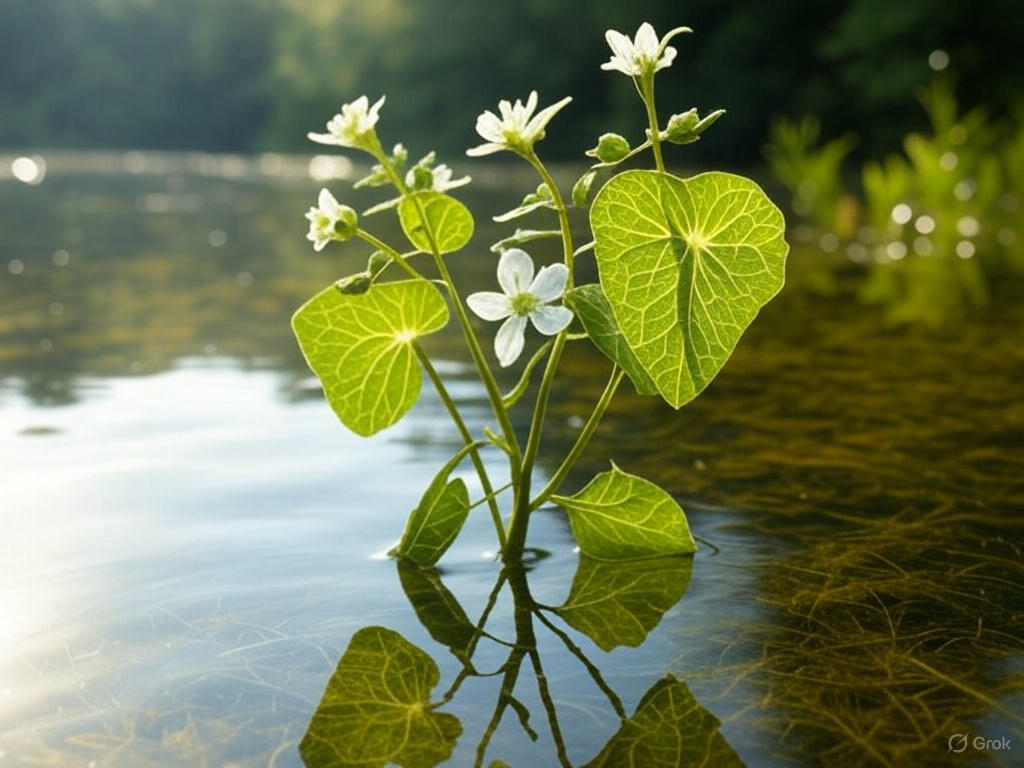
Understand the Plant Before Choosing Its Pond Position
Common Arrowhead at a Glance
Growth varies with climate, water depth, soil, plant source and local conditions. Nursery labels and regional guidance should take priority over generalized measurements.
A member of the water-plantain family, Alismataceae.
Common names vary by location and supplier.
Naturally associated with marshes, pond margins and slow water.
Flowering and compact growth are usually strongest with good light.
Tubers, rhizomes and seed can expand a colony over time.
Top growth normally dies back while underground structures persist.
Compare Leaves, Flowers, Stems and Habitat
How to Identify Common Arrowhead
Mature emergent leaves are the best-known feature, but leaf form can vary with plant age and water conditions. Identification should use the complete plant and its growing environment.
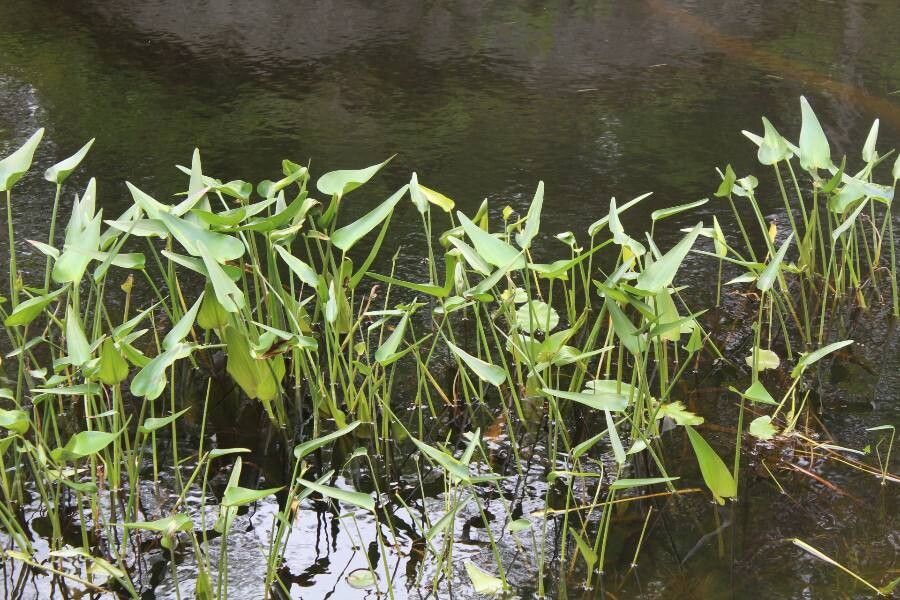
Broad blades with two backward-pointing basal lobes
Mature emergent leaves frequently form the familiar arrow shape. Younger or submerged leaves may look narrower and should not be judged alone.
Small white flowers arranged along upright stalks
Flowers are generally carried in spaced clusters. Details can help separate Sagittaria species, so use regional references where exact identification matters.
Leaves rise above wet soil or shallow water
Common arrowhead is an emergent plant rather than a free-floating species. Its roots and underground structures remain anchored in the substrate.
Rhizomes and tubers can extend beyond the original crown
New growth may appear away from the parent plant, especially where the plant has open soil and no basket boundary.
Do not identify an edible or medicinal plant from photographs alone.
Similar-looking wetland plants occur in the same habitats. Positive identification requires the complete plant, suitable regional references and, where needed, an experienced local expert.
Value the Plant Without Overstating What It Can Do
Ecological Role and Historical Importance
Common arrowhead can contribute structure and food resources in suitable wetland habitats. Its value depends on location, surrounding vegetation, wildlife communities and responsible management.
Emergent Structure
Upright leaves and stalks create structure above the waterline and around shallow pond margins.
Wildlife Association
Tubers, seeds, stems and surrounding habitat may be used by wildlife, although use varies greatly among regions and species.
Traditional Food History
The underground tubers have a documented history of use by Indigenous peoples in parts of North America.
Pond-Edge Transition
In a suitable design, arrowhead can visually connect open water with moist planting areas and taller marginal growth.
Historical edibility is not a recommendation to harvest or eat wild plants.
Wetland plants can be misidentified or exposed to pollutants, pathogens, pesticides and contaminated sediment. Do not consume any plant without reliable identification, a safe source, appropriate preparation knowledge and confirmation that harvesting is lawful.
Give the Crown Moisture Without Losing Control of the Roots
How to Plant Common Arrowhead in a Pond
A wide aquatic basket is usually easier to manage than planting directly into an unrestricted pond margin. Exact planting depth should follow the nursery label and the condition of the individual plant.
Check Local Status
Verify that the plant is suitable and legal in your region before purchase, transport or planting.
Choose a Stable Basket
Use a broad aquatic container with enough weight and volume to support mature upright growth.
Use Aquatic Planting Media
Avoid loose rich compost. Use suitable aquatic media and secure the surface with stable, smooth gravel where appropriate.
Start Shallow
Position the crown near the waterline or only slightly below it, unless the supplied plant label recommends otherwise.
Monitor New Growth
Check that emerging leaves remain above water and that the basket is not leaning, floating or losing planting media.
Do not bury the growing point beneath a deep layer of soil or gravel.
The crown should remain positioned so that new leaves can emerge freely. Water depth can be adjusted gradually after the plant is established.
Maintain Healthy Growth Without Encouraging Uncontrolled Spread
Seasonal Care and Maintenance
Common arrowhead is often vigorous once established. Most routine work involves maintaining the basket, removing damaged growth and managing expansion.
Spring
Remove loose dead material, inspect the basket and wait for active growth before deciding that a dormant crown has failed.
Summer
Monitor water depth, leaning stems, nutrient deficiency, crowded crowns and shoots appearing outside the intended area.
Autumn
Remove collapsing foliage carefully and keep cut material from decomposing in the pond.
Winter
Dormant underground structures may persist after top growth disappears. Winter survival depends on source, climate, depth and exposure.
Deadheading can reduce seed production but does not stop underground spread.
Tubers and rhizomes can continue expanding even when flowers are removed. Basket inspection and division remain important for long-term containment.
Prevent a Strong Wetland Plant From Escaping Its Intended Role
Containment and Responsible Management
Native status does not mean a plant is appropriate everywhere. Common arrowhead may be native in one region, absent in another or regulated outside its natural range.
Keep It in a Basket
A strong container makes division easier and limits direct access to surrounding pond soil.
Control Seeds and Fragments
Remove unwanted flower stalks before seed dispersal and collect all cut material during maintenance.
Protect Natural Waterways
Never release plants, tubers, seeds, soil or pond water containing fragments into natural habitats.
Compare Several Features Before Reaching a Conclusion
Common Arrowhead Identification Checklist
This checklist can organize observations, but it cannot provide a definitive botanical identification.
Mark the features you can clearly observe
Begin with the complete leaf shape and growth position.
Diagnose the Growing Conditions Before Adding a Treatment
Common Arrowhead Problems
One symptom can have several causes. Check water depth, light, planting media, crown condition, crowding and recent environmental changes before treating insects or fertilizing.
Weak or Floppy Growth
Review light, planting depth, basket stability, transplant stress and whether the stems are being damaged by flow or fish.
Yellowing Leaves
Older leaves naturally decline, but widespread yellowing may involve poor roots, unsuitable media, crowding or changing water conditions.
Few Flowers
Limited light, recent division, excessive shade, immature growth or strong vegetative expansion may reduce flowering.
Unwanted Spread
Remove escaped shoots and underground structures carefully, then move the remaining plant into a more secure container.
Practical Answers for Pond and Wetland Gardeners
Common Arrowhead: Questions Answered
Regional conditions and local regulations vary. Verify plant identity, hardiness and legal status before purchase or planting.
Select a question to reveal the answer
The answers below provide general cultivation guidance rather than food-safety or legal advice.
Duck potato is one of the common names used for Sagittaria latifolia because of its underground tubers. Common names vary, so the botanical name is more reliable when purchasing or identifying a plant.
Mature plants commonly have upright arrow-shaped leaves with two basal lobes, white flowers on raised stalks and roots anchored in wet soil or shallow water. Leaf form can vary, so several features and a regional botanical reference should be used together.
Begin with the crown near the waterline or only slightly submerged unless the nursery label states otherwise. Increase depth gradually after the plant establishes and keep new leaves able to reach above the surface.
Common arrowhead can grow in sun or partial sun, but strong light generally supports more compact growth and better flowering. Local heat, water temperature and plant source can affect the best position.
Common arrowhead can spread vigorously through rhizomes, tubers and seed. Whether it is native, invasive, restricted or appropriate depends on the region, so local regulations and invasive-species guidance should be checked.
The top growth normally dies back during dormancy while underground structures may survive. Winter performance depends on plant source, climate, water depth, freezing conditions and exposure.
The tubers have a documented history of traditional food use, but that does not make unidentified, ornamental or wild-collected plants safe to eat. Misidentification, contamination, lawful harvesting and correct preparation must all be considered.
Grow it in a strong aquatic basket, inspect escaping roots and shoots, divide crowded plants and remove unwanted flower stalks before seed dispersal. Deadheading alone does not prevent underground spread.
Choose the Plant Only After Checking Its Long-Term Role
Give Common Arrowhead Space, Structure and Boundaries
Common arrowhead can be a striking pond-edge plant when its mature size, spreading habit, regional status and winter needs are understood before planting.